
Nine car faults you must not ignore
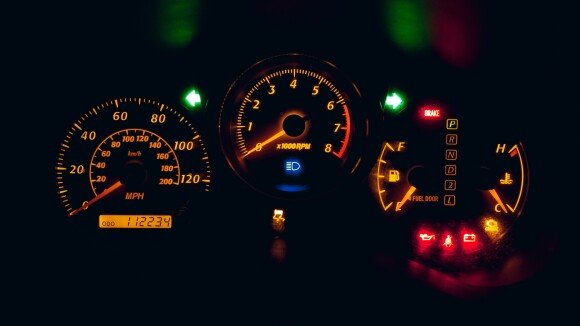
Some car faults are not critical and you can keep driving, while others require immediate attention. Let’s look at the most common failures you shouldn’t leave unchecked.
1. Dashboard lamps
We get real-time data about the car from the instrument cluster — lamps showing the state of the engine, transmission, steering and fluids. If some lamps have burnt out, it’s very hard to spot a problem in time without tools and knowledge. This leads to serious failures, costlier repairs and safety risks.
Burnt-out indicators and warning lamps must be replaced immediately. It’s easy to check: when you turn the ignition on, all lamps light up for a visual test. See a dead lamp or an inactive needle — plan a service visit.
2. Brakes
A brake fault is critical. Drivers often decide that with a minor fluid leak or pressure drop they can still drive a while. But you can’t predict when a small leak becomes critical. A brake failure has a very high chance of an accident.
Any brake fault must be fixed immediately: fluid leak, worn discs or pads, air in the system, worn seals or hoses, booster failure, and so on.
3. Steering
Steering faults are critical and can cause serious problems on the road. If you suspect one, go to the service station for diagnostics immediately. Better the fault turns out minor and is fixed in minutes than dealing with the consequences.
Faults include worn tie-rod ends, ball joints, electric or hydraulic power steering, beam and kingpins. All of these directly affect driving safety.
4. Suspension
Many consider the suspension the least critical unit that “can wait.” But it’s not that simple. For example, a humming wheel bearing heats up strongly while driving, the metal expands — and it can lead to a locked wheel and loss of control.
You can’t foresee the consequences in advance, but fixing the unit in time is simple. The same goes for other parts: shock struts, silent blocks, control arms.
5. Engine cooling
Most cooling-system faults lead to total engine failure. With a minor coolant leak you can drive while topping it up. But a thermostat or fan failure guarantees overheating and a major repair.
In that case, better not to drive until the fault is fixed. A failed temperature sensor makes it worse — you won’t even see the engine overheating.
6. Fuel system
A fuel leak is critical for safety. Damaged lines, hoses and joints need urgent repair. A car has many parts that get very hot (for example the exhaust), and fuel hitting hot metal is very likely to cause a fire. A spark in the wiring can too.
7. Fluids
Fluid levels must be checked regularly. Driving with low engine oil is a direct path to a major repair: without proper lubrication pressure, parts overheat and deform, and the engine can seize. If the low oil pressure lamp comes on — stop the engine and check for a leak.
Monitor all fluid levels: fuel, oil, coolant, brake fluid and ATF. Driving on a nearly empty tank kills the fuel pump — it’s cooled by fuel, and without it, it sucks air and overheats.
8. Transmission
On a manual, watch the clutch. A specific smell, an unusual sound, poor acceleration, play or a “growl” in the shifter, low gearbox oil — all are reasons to visit the service station. Even manual transmission repair isn’t cheap, and delay only makes it worse.
Any unusual automatic behaviour — jerks, shift delays — is also a sign of failure. Running with faults wears the gearbox quickly, and delay leads to a full overhaul.
9. Electrics
Charging system and alternator faults must be fixed in time. Without charging, the battery lasts no more than 30 km — the battery lamp is a clear sign to use those kilometres to reach the nearest service station.
Wiring faults cause serious consequences. Damaged insulation can cause a short circuit. Given that many cars use gas as the main fuel, a short with even a minor gas leak will surely cause a fire.
Summary
Faults that look minor at first often lead to much bigger failures that rob your trip of comfort and safety and cost a lot of unplanned time and money. Without attention to your car’s condition, you’ll surely spend more on an unplanned major repair.